Journal
Fade or taper: what to ask your barber for
A taper shortens the edges; a fade takes the whole side down, often to skin. How to tell them apart, and how to ask for the one you want.
A taper shortens the hair at the sideburns and the neck only; a fade takes the whole side down, often to skin. Both are booked for the same forty-five minutes, and both finish the same way at the neck, with a hot towel. The only thing that actually changes between them is how far down the clippers go before they stop.
The sideburns and the neckline shortened gradually to a clean natural edge — no bare skin — with the same hot towel and neck finish. The sides and back faded down to bare skin. Low, mid, high, drop or burst is your choice, at one price, finished with a hot towel and a razor line.
What “fade” covers, and what “taper” never does
A taper has one shape: it starts full at the top of the side and narrows to nothing at the hairline, and it never runs out of hair to taper into. A fade is a family of shapes with the same idea taken further — low, mid, high, drop or burst is where the clippers start working down toward skin, not whether they get there.
Low starts the fade close to the ear; mid starts around the temple; high starts further up the side, closer to the top; a drop fade follows the curve behind the ear instead of a straight line; a burst fade rounds around the ear on its own and leaves the back longer. None of that changes what a fade is finishing toward, only where it begins.
A taper has no such menu, because it has nowhere lower to go: the sideburns and the neckline shortened gradually to a clean natural edge — no bare skin — with the same hot towel and neck finish.
The same choice, on curly and coily hair
Curly and coily hair is often shaped dry, so the barber can see where each curl sits before it is cut. A fade and a taper are cut the same way regardless of hair type, and asking for either works the same whether the hair on top is straight, wavy, curly or coily — the shape at the side does not depend on the shape of the curl above it.
What does change is how the finished edge reads once the hair dries and springs back a little, which is one more reason to say what you want in words rather than leave it to the number alone.
The finish is the same, top to bottom
Above the line, nothing changes with the choice: clipper on the sides and back, scissors on top, any length above the collar, finished with a hot towel and a razor line at the neck. That top is scissor-cut or clipper-cut the same way whether the sides taper or fade, because the decision that separates the two happens only at the edge, not on top.
What both share at the bottom is the closing move, not just the opening one: a hot towel to finish, and a razor run along the neckline so the last edge is as clean as the first cut was. A barber does that step the same way on a taper as on a fade — it is not part of what makes a fade cost more.
What can be added to either
A skin fade and a taper take exactly the same add-ons: beard trim and line-up, hot towel shave, eyebrow tidy, hard part or simple design, shampoo and style and gray blending. Whichever you choose, the calendar adds the extra minutes and the extra price the same way.
A skin fade with a beard trim
- Skin fadeforty-five minutes$50
- + Beard trim and line-upfifteen minutes$20
- In the chair, and at the counteran hour$70
Skin fade (forty-five minutes, $50) and beard trim and line-up (fifteen minutes, $20): the calendar holds an hour and the price at the counter is $70, before the City's 4.5% sales tax.
That example is a fade; the arithmetic works identically if a taper is the service being added to instead, at the taper's own price.
How each grows out
Because a taper leaves more hair, it grows out more gently: most people who wear one come back every four to six weeks.
A skin fade grows out fastest of any cut, which is why most people who wear one are back every two to three weeks.
A taper is priced like a classic cut, because it takes the same time.
Who to ask for
Any of the five barbers cuts a taper here — it takes no particular specialty. A skin fade is closer, sharper work right at the skin, and here it is done by Ruel, Rosa, Tenzin and Arif.
The fade is finished with a razor line, so a skin fade is never done over broken or irritated skin.
Changing your mind later
Moving from a taper to a fade is a short conversation: the barber simply takes the same edge further down toward skin next time. Moving the other way takes longer, because the part that was shaved has to grow back in before it can be tapered instead — there is no clipper setting that puts hair back once it is gone.
That is worth knowing before the first visit, not after it: if you are unsure which one you want long-term, a taper is the easier one to change your mind out of.
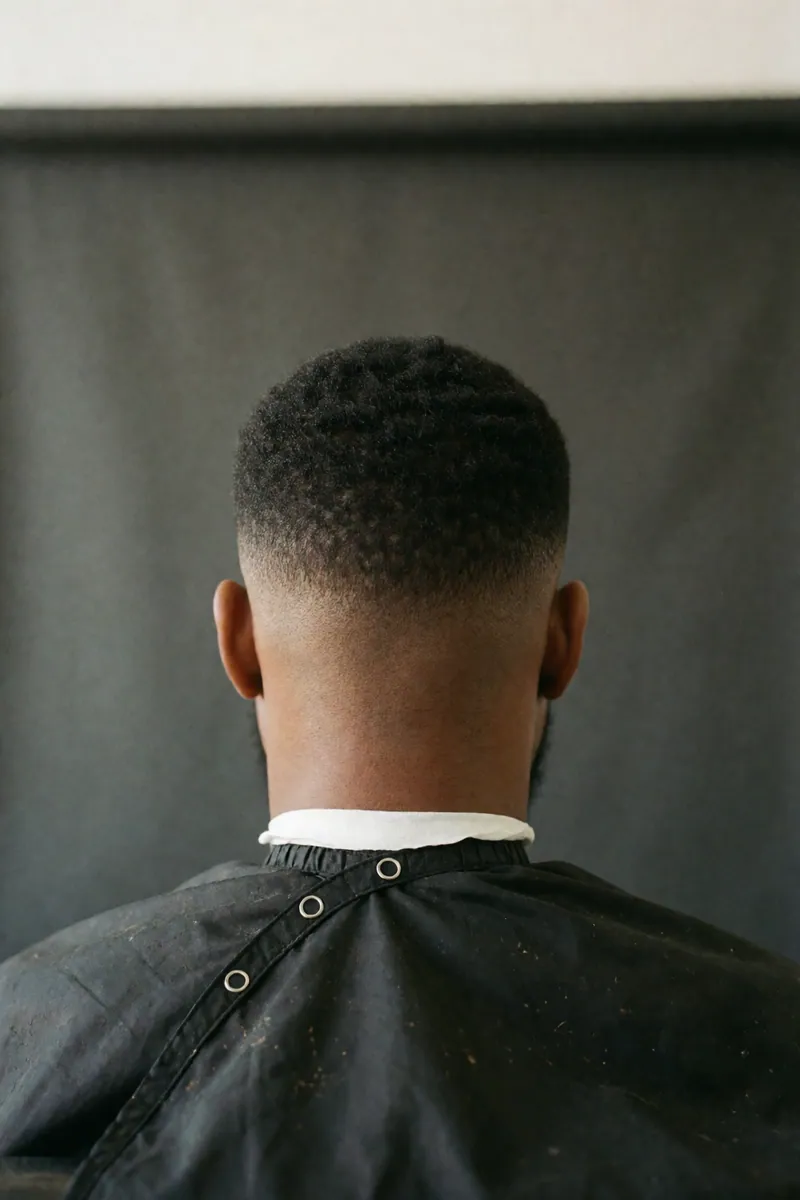
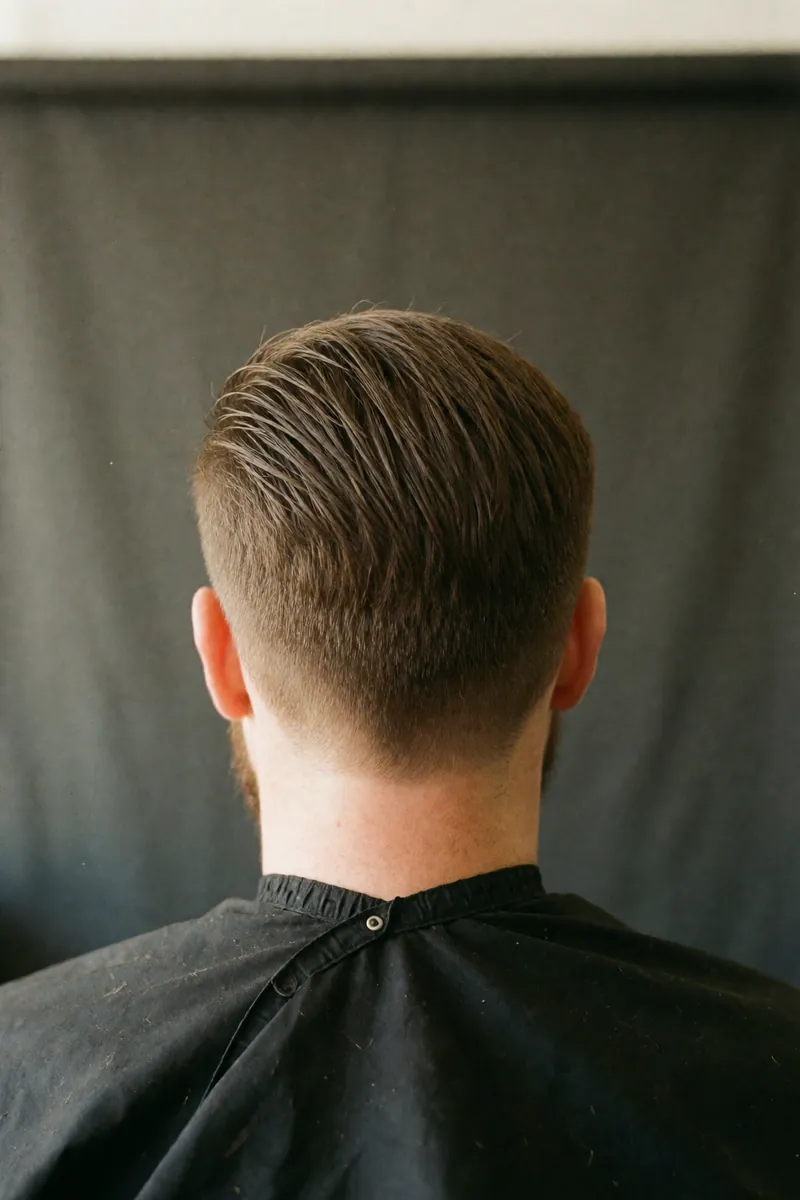
Two cuts to point at, rather than describe
Words only get a barber so far. Here is the cut itself, so “a little higher” or “not that low” has something to point at.
What each costs
$50 forty-five minutes
- Skin fade, with Ruel, Rosa, Tenzin and Arif.
- Most people are back every two to three weeks.
- Paid at the shop, in cash or by card, not on this website. The City's sales tax is added at the counter.
$45 forty-five minutes
- Taper, with any of the five barbers.
- Most people are back every four to six weeks.
- Paid at the shop, in cash or by card, not on this website. The City's sales tax is added at the counter.
Where to go next
- Skin fades — every height, one price.
- Tapers — the gentler edge.
Book a chair, or just walk in
Book a time with the barber you want, or with whoever is free first — or just walk in. The online calendar always keeps a chair back for walk-ins, and nothing is paid online.