Journal
Looking after a beard between trims
Wash it, soften it, comb it, and leave the shape to the barber. What oil and balm do, and the one thing no product does.
Most of what a beard needs between trims is small and repeatable: wash it, soften it with a little oil, comb it into place, and leave the shape — the cheek line, the neckline — to the barber who cut it last. None of that grows anything faster or thicker; it just keeps what is already there comfortable and tidy.
Washing
A beard sits over the same skin as the rest of the face and collects the same everyday oil, so it wants a wash on the same schedule as the hair above it, with the same shampoo: an everyday shampoo, the one used at the basin in the shop. There is no separate beard version of it.
Hot water alone dries out both the beard and the skin under it faster than washing it does. A short, warm rinse and an ordinary shampoo is enough; there is no case here for washing it more than the hair on top of the head.
Beard oil, plainly
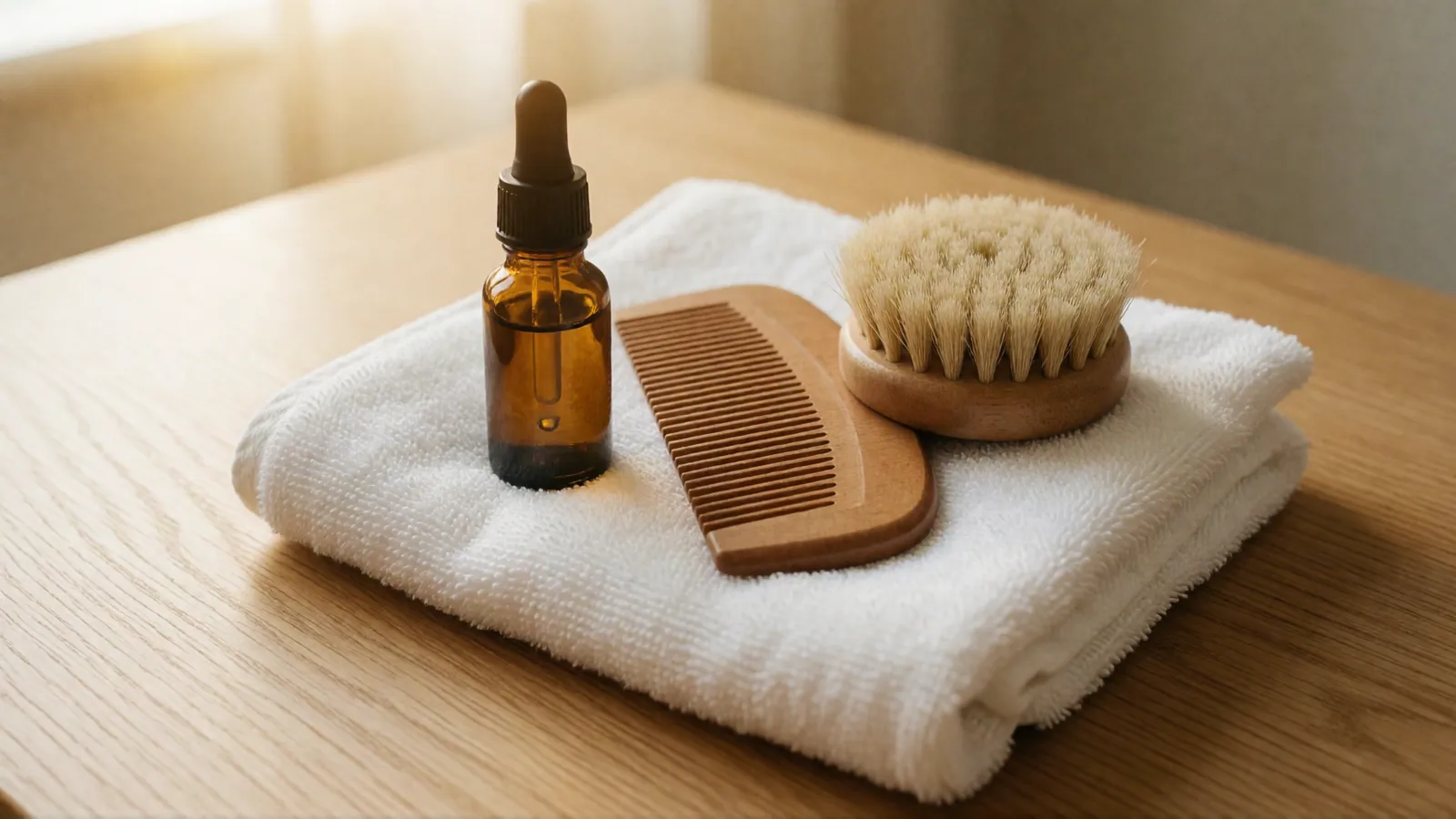
On the shelf here, a beard oil (1 oz, $22) does one job: softens the beard and the skin under it, and stops the itch of a new beard. A few drops worked in after a wash, while the beard is still slightly damp, spread further than the same amount on dry hair.
What it will not do. Beard oil softens a beard and the skin under it. No oil grows a beard, and the shop sells none that claims to.
The itch of a new beard
A beard grown from scratch usually itches for its first couple of weeks, and it is the skin underneath doing the complaining, not the hair. Growing hair is stiffer and more angled against the skin than it will be once it lies down properly, and dry skin under a new beard makes the itch worse rather than better.
Washing it and working a little oil into the skin underneath, not just the hair on top, is what actually settles that: it softens both the hair and the dry skin it is pressing against. It is a short phase, not a permanent feature of having a beard — most people stop noticing it once the beard has some length to it.
Balm, for a longer beard
A longer beard asks for more hold than oil gives on its own. A beard balm (2 oz, $22) is built for that: conditions a longer beard and holds its shape through the day. It is worked in the same way as the oil, just with more of it, and it is what keeps a longer, shaped beard sitting the way it was cut through a whole day rather than only through the morning.
The two are not competing products so much as two amounts of the same idea: oil for a short beard that mostly needs softening, balm once there is enough length and shape for it to need holding as well. A longer, sculpted beard often wants both — oil after the wash, balm once it is dry, worked in wherever the shape needs to sit down for the day.
In order
Wash
The same everyday shampoo used above it, on the same schedule as the hair on top.
Pat, do not rub, it dry
A beard tangles less coming out of a towel that pats than one that scrubs.
Oil while it is still a little damp
A few drops worked in with the fingers, into the skin underneath as well as the hair, spread further than the same amount on dry hair.
Comb it into place
Against the grain first to lift it, then with the grain to settle it, while the oil is still working through.
Balm, if it is long enough to need holding
Worked in the same way as the oil, on top of it rather than instead of it.
Combing, and the neckline
Combing does two things a finger cannot: it trains the beard to sit in one direction as it dries, and it spreads oil or balm evenly instead of leaving it wherever it landed. A few strokes downward, against the grain first and then with it, is enough — a beard does not need working over.
A trim itself is a specific reset: a beard's length and shape taken back, the cheek and neck lines edged with a razor, and a hot towel. The neckline is the part that grows out fastest and shows it soonest, because it is the newest edge on the whole beard — everywhere else is simply beard getting longer, but the neckline is the line between beard and bare neck, and it moves down a little every day whether the rest of the beard is trimmed or not.
Trim or sculpt?
A trim is upkeep: a beard's length and shape taken back, the cheek and neck lines edged with a razor, and a hot towel. It assumes the beard already has the shape somebody wants and simply takes it back to where it was.
A sculpt is a bigger job, for a longer beard: a longer beard shaped with scissors and clippers, faded into the sideburns, razor-edged, with a hot towel and a little oil. It is what turns a beard that has just been left to grow into one with an actual shape — faded sides, a defined edge into the sideburns — rather than only a length.
Added onto a cut, or on its own
A beard trim does not have to be its own visit. Added to a cut it takes fifteen minutes more in the chair and adds $20 to the price, done by any barber — the same trim, on the same visit as the haircut.
When to come back
A trim keeps the shape; it does not reset it from nothing, which is why a beard trim is booked every ten to fourteen days and a beard sculpt, which is more shape than trim, stretches a little further, to every two to three weeks.
$25 twenty minutes
- Beard trim and line-up, with any of the five barbers.
- Most people are back every ten to fourteen days.
- Paid at the shop, in cash or by card, not on this website. The City's sales tax is added at the counter.
$35 thirty minutes
- Beard sculpt, with any of the five barbers.
- Most people are back every two to three weeks.
- Paid at the shop, in cash or by card, not on this website. The City's sales tax is added at the counter.
Where to go next
- Beard trims and sculpting — the service itself.
- Products on the shelf — the whole shelf, not just the beard end of it.
Book a chair, or just walk in
Book a time with the barber you want, or with whoever is free first — or just walk in. The online calendar always keeps a chair back for walk-ins, and nothing is paid online.